




Many Mississippians have no idea that golf carts are NOT street legal by default throughout the state. After all, golf carts are everywhere in Mississippi, especially near Madison and down on the Gulf Coast.
In Mississippi, golf cart street legality depends almost entirely on the city you’re in. This is because state law SB 2605 went into effect in 2021, designating Mississippi as a “local option” state, which allows each city to decide its golf cart laws for public roadways via ordinance.
So before you load up the family and head down the street, it’s worth knowing what your city allows and what the state requires on top of it.
Quick Facts About Golf Cart Laws in Mississippi
Short on time? Here are the questions people ask most.
Are golf carts street legal in Mississippi?
Whether or not you can legally drive a golf cart in Mississippi on public roadways is determined on a city-by-city basis, with only cities that have passed an ordinance allowing it.
The only statewide golf cart law in Mississippi that applies to all cities is the 2021 state law (Senate Bill 2605), which gives each city and town the power to permit golf carts and low-speed vehicles (LSVs) on local streets.
If your city opted in, you can register your cart and drive it on approved public roads. If it hasn’t, your cart has to stay on private property.
Do you need a driver’s license to drive a golf cart in Mississippi?
Yes. Anyone driving a golf cart on a public road in Mississippi must carry a valid driver’s license or a temporary driver’s permit. This applies in every city that allows golf carts, with no exceptions for short trips or quiet neighborhoods.
Do you need insurance for a golf cart in Mississippi?
Yes, if you drive on public roads, state law requires proof of financial responsibility (liability insurance) to operate a golf cart or low-speed vehicle on city streets; you’ll need to provide proof of insurance when you register with your city. A cart that never leaves private property generally doesn’t need coverage, though it’s still a smart idea.
How old do you have to be to drive a golf cart in Mississippi?
Since a valid driver’s license is required to drive on public streets in cities that allow it, the minimum legal driving age is 16 for driving golf carts in Mississippi. Because Mississippi requires a license, there’s no option for younger, unlicensed drivers with supervision for street driving, as some states allow. Your city’s ordinance can add its own rules on top of that.
Where can you drive a golf cart in Mississippi?
Only on the streets your city’s ordinance approves, which are usually roads posted at 30 mph or lower. State law keeps golf carts and low-speed vehicles off state and federal highways except to cross at an intersection, and you have to take the shortest path across. On multi-lane roads, stay in the right-hand lane.
Are Golf Carts Street Legal in Mississippi?
The honest answer is “it depends on your city,” and that’s not us dodging the question. It’s how the Mississippi law actually works.
For years, Mississippi had no clear statewide framework for golf carts on public roads. They were treated as private-property vehicles, full stop. That changed in 2021, when the state passed Senate Bill 2605. The law didn’t make golf carts street legal everywhere. Instead, it handed the decision to local governments, letting each city or town pass its own ordinance permitting golf carts and low-speed vehicles on its streets.
The result is a patchwork. A cart that’s perfectly legal to drive through a neighborhood in Ocean Springs might be illegal two towns over.
Wherever a city does opt in, the same statewide baseline applies. You register the cart with the city, carry a valid driver’s license, and show proof of liability insurance. The cart gets a registration decal (Mississippi Code Section 63-32-5 specifies it goes on the left rear fender), and the city gives you a map of which streets you’re allowed to use. Highways stay off-limits except to cross.
So, how do you know if your city allows it? We’ve mapped the major ones below, but the safest move is always a quick call to your city clerk or police department.
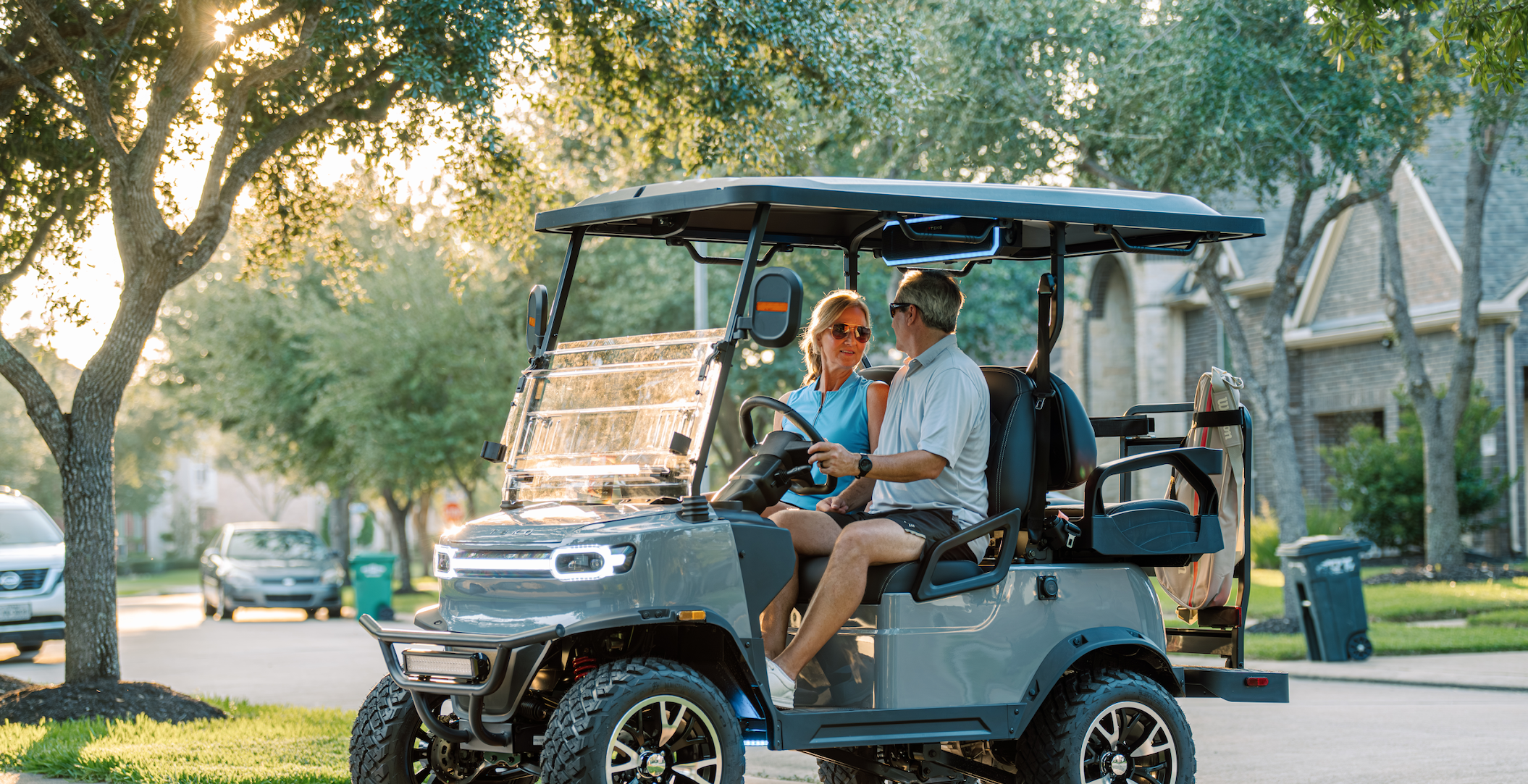
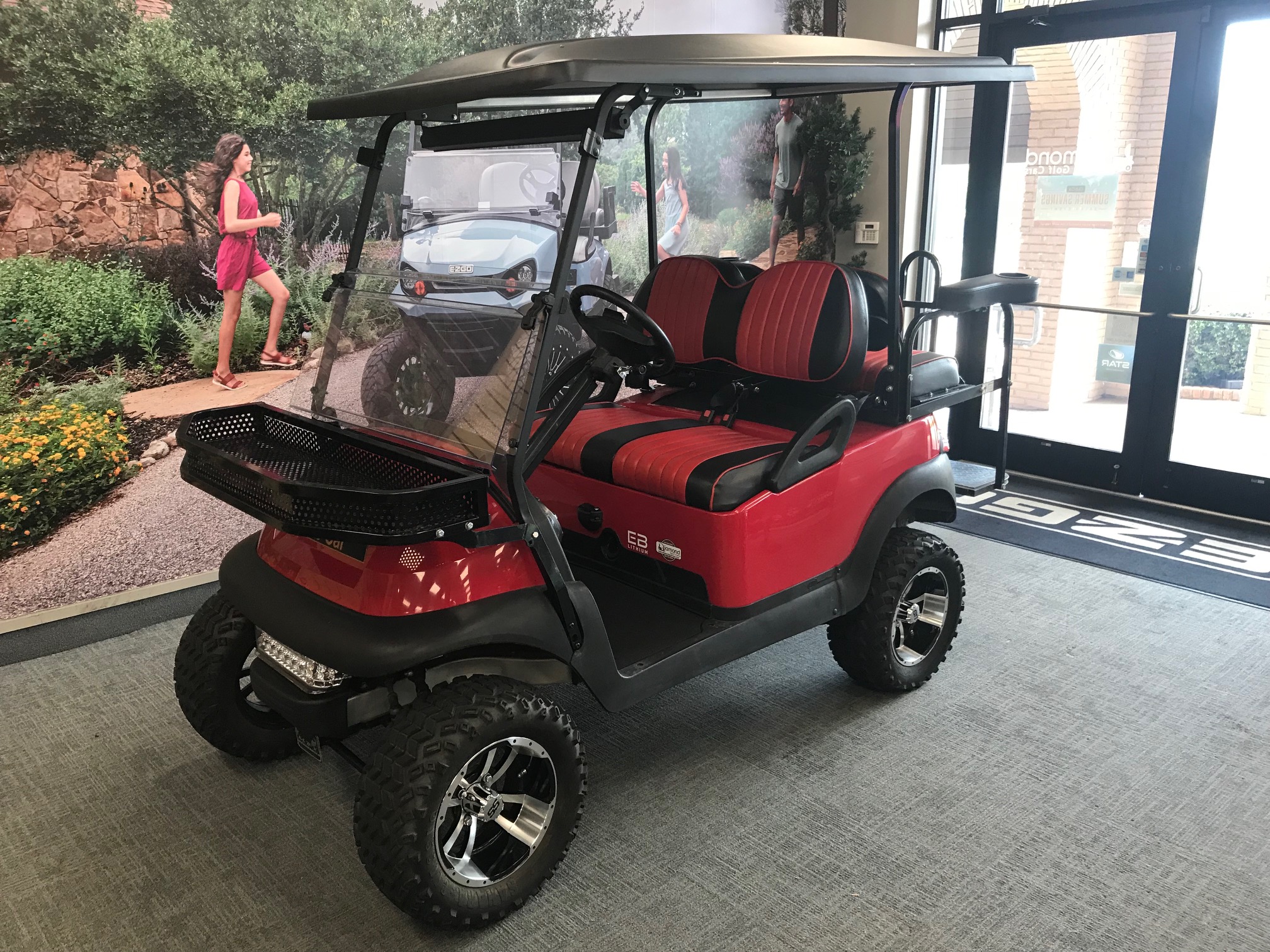

Golf Cart vs. Low-Speed Vehicle: What’s the Difference?
A golf cart is built for recreation and golf-course use, with a top speed of around 20 mph. To drive one on public streets in a city that allows it, Mississippi generally expects basic safety equipment like a parking brake, headlights, taillights, turn signals, and seat belts. Confirm the exact list with your city, since ordinances vary.
A low-speed vehicle (LSV) is a step up. It’s a four-wheeled vehicle, electric or gas, that goes faster than 20 mph but tops out at 25 mph. An LSV has a Vehicle Identification Number (VIN), a gross vehicle weight under 3,000 pounds, and meets federal safety standards. That means it comes from the factory with headlamps, taillamps, brake lights, turn signals, reflectors, a parking brake, rearview mirrors, a windshield, and seat belts. In plain terms, an LSV is a street-legal golf cart right out of the box, and it requires yearly registration and insurance, much like a regular vehicle.
Here’s why this matters when you’re shopping: A factory-built LSV clears the equipment bar without any retrofitting. If street driving is your goal, starting with an LSV saves you the headache of trying to upgrade a basic cart later. The street-legal brands we carry, like Atlas, Dach, and Evolution, are built to that standard.
Registration and Licensing Requirements
In Mississippi, golf cart registration happens at the city level, not through a statewide DMV. If your town allows carts on city roads, you register with the city (often through the city clerk’s office) and pay a small fee.
Here’s what you’ll typically need:
- Proof of ownership for the cart or LSV
- A valid driver’s license or temporary learner’s permit
- Proof of financial responsibility (liability insurance)
Once you’re registered, the city issues a decal for the cart and gives you a map of the streets where you’re allowed to drive. Keep your license and insurance proof with you whenever you’re out, since you’re required to have them while operating on public roads.
Golf Cart Insurance Requirements in Mississippi
If you drive on public roads, you need liability insurance. Mississippi requires proof of financial responsibility to operate a golf cart or LSV on city streets, and you’ll show it both when you register and any time an officer asks.
As for how much coverage is required, that can depend on your city or county. When Madison County approved golf cart use on certain roads, its ordinance set a minimum of $25,000 in bodily injury coverage per person and $50,000 per occurrence. Check your local ordinance for the figure where you live.
If your cart never leaves your own property, you’re generally not required to carry insurance; however, we’d still recommend it. A golf cart is a real investment, and coverage protects you against theft, fire, and the occasional fender-bender with the mailbox. Common options include liability, collision, comprehensive, and medical payments coverage.
Where You Can and Can’t Drive
Even in cities that allow golf carts on public property, you can’t drive them on every road. The rules of the road for golf cart drivers in all cities in Mississippi generally look like this:
- Approved streets only, usually roads posted at 30 mph or lower
- No state or federal highways, except to cross at an intersection by the shortest route
- Right-hand lane on multilane roads
- No sidewalks
- Daylight hours are enforced in some cities, unless your cart has full lighting (headlights, brake lights, front and rear turn signals, and a windshield)
Your city’s ordinance is the final word, and a few cities are stricter than the state baseline. When in doubt about the local rules, the city clerk’s office can tell you exactly which streets you can and can’t drive golf carts on.
Mississippi Golf Cart Laws by City
This is where Mississippi golf cart laws get specific. Because the state leaves golf cart rules up to local governments, your city’s ordinance is what actually governs your driveway-to-downtown trip. Here are the rules in the areas where golf carts are most common. Laws change as more cities opt in, so confirm the current version with your city before you drive.
Gulf Coast
The Mississippi Gulf Coast has the densest cluster of cart-friendly towns in the state, and the culture to match.
Ocean Springs was the first Mississippi city to allow golf carts on public streets, back in 2018. Carts are permitted only on roads posted at 30 mph or lower. You can’t drive on Highways 90 or 609 except to cross them, and you have to cross at intersections by the shortest route, not diagonally. On multilane streets, stick to the right lane. Seat belt use is required for every occupant, including kids in child safety seats.
Diamondhead allows golf carts and low-speed vehicles through most of its residential areas. You can’t drive across or on I-10, though carts are welcome on city-approved parade routes. Diamondhead requires registration and a decal, and the city publishes a registration packet to walk you through the process.
Pass Christian, Pascagoula, Bay St. Louis, Waveland, and Long Beach have all passed cart-friendly ordinances of their own. Each sets its own speed limits, registration steps, and approved streets, so check with the specific city before you head out.
Jackson Metro
Madison has been a golf cart town longer than most. The city secured street access for its golf communities back in 2018, before the statewide law even existed, by passing a local bill. Neighborhoods like Annandale, Reunion, and Northbay have been driving carts on approved streets ever since.
Madison County extended the idea to certain unincorporated roads in 2024. The county ordinance set insurance minimums of $25,000 per person and $50,000 per occurrence. It also made clear that breaking the rules earns you a traffic ticket, the same as it would in a car. Worth knowing: the city of Madison and unincorporated Madison County are governed separately, so the rules can differ depending on which side of the line your street falls on.
If you’re in Ridgeland, Brandon, Pearl, Flowood, or Clinton, check your city’s current status directly. Ordinances are being added and updated across the metro, and “my neighbor does it” isn’t the same as “my city allows it.”
Starkville and Mississippi State University
Starkville has its own municipal rules for golf carts and low-speed vehicles on city streets. If you’re a resident or a gameday regular, pull the current city ordinance before you drive.
One catch worth flagging: the Mississippi State University campus enforces its own restrictions, separate from the city’s rules. The same road that’s fine on Starkville streets may not fly once you cross onto campus. If you’re driving around MSU, check both.
Safety Tips for Mississippi Golf Cart Owners
A golf cart feels casual, but it’s still a vehicle, and a low, open one at that. A few habits keep everyone safe:
- Wear seat belts if your cart has them, and make sure passengers do too
- Obey traffic laws and signals exactly as you would in a regular motor vehicle
- Use turn signals and yield to pedestrians
- Stick to approved low-speed streets instead of busy roads
- Keep the cart maintained, especially brakes, tires, and lights
These tips aren’t complicated and mostly come down to remembering that other drivers won’t spot you as easily as they’d spot a full-size vehicle.
How Diamond Golf Cars Can Help
We’re based in Alabama, but we ship across the Southeast and work with plenty of Mississippi customers, so we know these rules well.
If your goal is to drive golf carts on the street, the simplest path is to start with a cart that already meets the equipment standards your city requires. That’s why we point most street-minded buyers toward factory street-legal LSVs. Brands like Atlas, Dach, Evolution, and Club Car’s LSV models come road-ready out of the box, with no retrofitting required. We won’t bolt a few lights onto a basic cart and call it street legal because that’s not how the law sees it. And we’d rather set you up right.
Not sure which cart fits your city’s rules and your budget? That’s exactly the kind of question our team likes to answer.
Customer Testimonials
I never had the opportunity to actually make it to dealership. Told Alex what we wanted and he stayed in constant contact with me through the process. Then Garrett delivered it to me went through the cart to explain and answer any questions I had. This was the most hassle free purchase I have ever had with no pressure. Club car we ordered looks great and drives awesome!Dale Henderson
I had some questions about a Dach golf cart and Mr. William was great and answered very question I had and even showed a few really really nice carts. If you are looking for a great golf cart, I highly recommend speaking with Mr. William. He is great! I’m sure I will be doing business with him real soon.Chris Baldwin
Alex was fantastic! No pressure sales and great with follow through – he was able to find and install an attachment so I can take my trash cans up the driveway. We love our Atlas!! Has all the bells and whistles!Darcy Schofill
Frequently Asked Questions
-
Q: Can you drive a golf cart on the sidewalk in Mississippi?
A: No. Golf carts and low-speed vehicles aren’t allowed on sidewalks. They belong on approved low-speed streets in cities that permit them, not on pedestrian paths.
-
Q: Can you drive a golf cart at night in Mississippi?
A: Sometimes, depending on your city and your equipment. Some Mississippi cities limit golf carts to daylight hours unless the cart is equipped with full lighting, including headlights, brake lights, turn signals, and a windshield. Check your local ordinance.
-
Q: Is a golf cart the same as a low-speed vehicle?
A: No. A golf cart tops out around 20 mph and is built for recreation. A low-speed vehicle goes 20 to 25 mph, carries a VIN, meets federal safety standards, and is registered and insured like a regular vehicle. An LSV is essentially a street-legal golf cart.
-
Q: Do you need a VIN for a street-legal golf cart in Mississippi?
A: If it’s a low-speed vehicle, yes. LSVs have a 17-digit VIN and meet federal safety standards. A basic golf cart doesn’t come with a VIN, which is one reason a factory-built LSV is the easier route to street-legal driving.
-
Q: Can a 14- or 15-year-old drive a golf cart in Mississippi?
A: Not on public streets. Mississippi requires any person operating a golf cart or LSV on a public road to have a valid driver’s license, which means 16 at the youngest. On private streets, age rules are up to the property owner.
The Bottom Line
In Mississippi, the answer to “Can I drive my golf cart on the street?” almost always comes down to your city. The state sets the baseline (a license, insurance, registration, and no highways), but your local ordinance decides whether you’re cruising legally or risking a ticket. The easiest way to stay on the right side of all of it is to start with a street-legal cart built to meet the requirements from day one.
If you also drive across the state line, our guide to Alabama golf cart laws covers the rules there. And when you’re ready to find the right cart, browse our inventory or reach out to our team, and we’ll help you pick one that fits both your city’s rules and your driveway.